

The smartest way to revamp your closet for fall is to audit what you own, build new layered outfits, and buy only proven gaps. A fall wardrobe refresh should improve outfit options, not simply increase the number of clothes in your closet.
Start with your actual week, local weather, favorite silhouettes, and most-worn pieces. Then decide which clothes deserve another season in rotation. A focused reset often makes an existing wardrobe feel new without a complete overhaul.
What Is the Smartest Way to Revamp Your Closet for Fall?
Use an outfit-first reset instead of a shopping-first reset. Review every fall-ready piece, create combinations, identify missing functions, and shop only after the gaps become clear.
Seasonal marketing often makes familiar clothes feel outdated before you test them again. Your first task should therefore involve rediscovery. Pull forward denim, trousers, shirts, dresses, knitwear, jackets, boots, and closed-toe shoes that suit cooler days.
Next, build complete outfits rather than judging each garment alone. A plain shirt can look tired on a hanger but useful under a cardigan. A summer dress can work with boots and a jacket. A blazer can feel current when paired with different denim or footwear.
The strongest fall refresh changes how your wardrobe works. Better visibility, better combinations, and fewer weak purchases create more value than a large seasonal haul.
How to Audit Your Closet Before Buying Fall Clothes
To audit your closet before buying fall clothes, sort pieces by fit, condition, frequency, and outfit potential. The audit should tell you what works before a trend or sale tells you what to buy.
Check fit, condition, and real wear
Keep clothes that fit your current body, suit your current life, and still feel good to wear. Repair pieces with simple problems, such as loose buttons, minor hems, or removable pilling, before replacing them.
Look at real wear instead of imagined wear. Separate reliable pieces from clothes you repeatedly skip. Ask why each skipped item stays unworn. Common reasons include poor fit, difficult care, uncomfortable fabric, awkward color, or no compatible shoes.
Separate fall-ready pieces from seasonal storage
Move true warm-weather pieces out of prime closet space, but keep useful transitional clothes accessible. Tank tops, short-sleeve tees, light shirts, midi skirts, and dresses can remain valuable under fall layers.
Store pieces that cannot handle your expected temperatures. Bring jackets, knitwear, denim, trousers, rain layers, boots, and other seasonal workhorses into easy reach. Better visibility reduces duplicate purchases.
Find wardrobe gaps through outfits
Identify gaps by trying to finish outfits, not by copying an essentials list. A genuine gap prevents multiple useful combinations from working.
For example, 3 trousers and 4 tops can still produce weak options when every suitable shoe feels too formal. One versatile loafer or boot can solve more problems than another sweater.
A digital catalog can make the audit easier because you can search by season, color, occasion, and item type. Stirolo’s wardrobe management tools also track wear patterns, helping you distinguish useful staples from forgotten pieces.
How to Transition Summer Clothes Into Fall Outfits
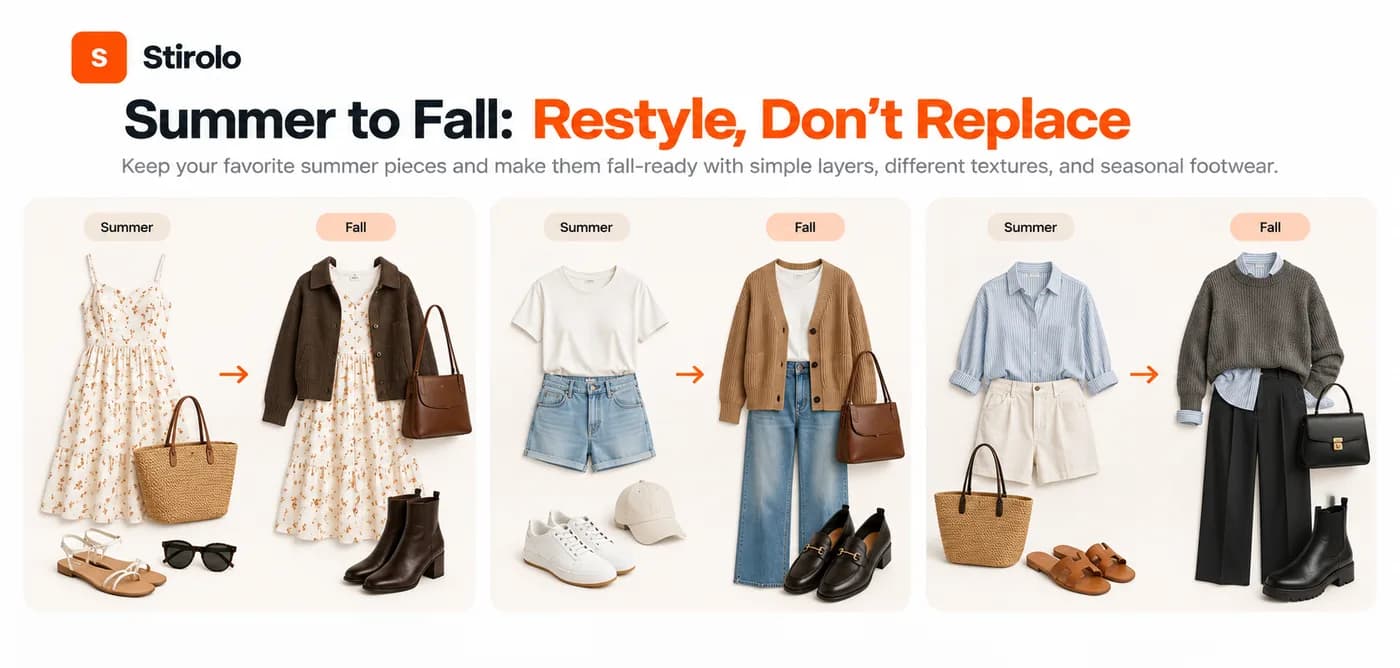
To transition summer clothes into fall outfits, keep useful base pieces and change warmth, texture, and footwear around them. Fall dressing works especially well with removable layers because temperatures often shift during the day.
Keep lightweight base layers in rotation
Use summer tees, tanks, shirts, skirts, and dresses as base layers when the fabric still suits the temperature. Add coverage instead of retiring every warm-weather garment at once.
A cotton tee can sit under a cardigan or blazer. A sleeveless dress can pair with a jacket and boots. A light button-down can work beneath knitwear. These combinations increase seasonal mileage without extra purchases.
Add warmth through removable layers
Build outfits with 1 removable outer layer before adding heavy winter clothing. Cardigans, overshirts, blazers, trench coats, denim jackets, and light wool coats give you flexible temperature control.
Choose layers that work across multiple base outfits. A jacket that only matches 1 dress has limited value. A jacket that works with denim, trousers, skirts, and dresses earns more closet space.
Change footwear and texture before replacing clothes
Switch shoes and textures before deciding an outfit feels too summery. Boots, loafers, suede, leather, wool, corduroy, and heavier knits can shift the seasonal character of familiar clothes.
You do not need an autumn-themed color for every outfit. Fabric weight and styling often communicate the season more effectively than a complete palette change.
Which Pieces Make the Biggest Difference in a Fall Wardrobe?
The highest-impact fall additions solve repeated outfit problems and work across multiple settings. Outerwear, shoes, knitwear, and versatile layers usually influence more outfits than isolated statement pieces.
Prioritize versatile layers
Choose layers that connect the largest number of clothes you already own. Useful examples include a cardigan, blazer, overshirt, trench coat, denim jacket, or lightweight wool coat.
Test each candidate against at least 3 bottoms and 3 tops before buying. A versatile layer should create several complete looks without requiring another purchase.
Upgrade high-wear shoes and outerwear
Spend more attention on pieces you wear repeatedly, especially shoes and outerwear. Boots, loafers, weather-ready sneakers, coats, and jackets affect comfort, practicality, and the finish of an outfit.
Check climate before buying. A heavy wool coat adds little value in a mild autumn. A water-resistant jacket can matter more in a rainy climate. Your local conditions should outrank generic fall checklists.
Treat trends as accents
Add 1 or 2 trend-led elements only after your core wardrobe works. Trend accents can include a current color, print, shoe shape, accessory, or updated silhouette.
Small trend additions reduce the risk of building a closet around short-lived preferences. A belt, scarf, bag, or single top can update several outfits with less commitment.
Quick Reference: Fall Closet Revamp Tasks
| Task | Timing | Method | Difficulty |
|---|---|---|---|
| Closet audit | 45-90 minutes | Check fit, condition, wear, and season | Easy |
| Outfit test | 60 minutes | Build complete looks from current clothes | Easy |
| Gap list | 15 minutes | Record only missing functions | Easy |
| Layer test | 30 minutes | Restyle summer pieces with fall layers | Easy |
| 7-day wear test | 7 days | Wear planned outfits and note friction | Moderate |
| Targeted shopping | After testing | Buy only gaps that solve repeated problems | Moderate |
How to Build a Fall Color Palette Without Starting Over
Build your fall palette from colors you already wear, then add 1 seasonal accent if you want change. A functional palette should make outfit pairing easier rather than force every garment into autumn colors.
Start with 2 or 3 neutrals already present in your closet. Examples include black, navy, cream, gray, camel, brown, or olive. Then identify 1 or 2 colors that already pair well with those neutrals.
You can introduce seasonal depth through burgundy, forest green, rust, chocolate, mustard, or another preferred shade. You do not need all of those colors. Choose the shade that works with your skin tone, existing clothes, and personal taste.
Repeat a new accent through small categories, such as a scarf, knit, sock, belt, or bag. Repetition makes the palette feel intentional without requiring a large purchase.
For more structure around seasonal dressing, use Stirolo’s seasonal transition guide to think about layering, fabric weight, and wardrobe continuity across changing temperatures.
How to Modernize an Older Fall Wardrobe
Modernize an older fall wardrobe by changing proportions, styling, and 1 high-impact category before replacing reliable basics. Many older pieces remain useful when you pair them differently.
Start with silhouette. Try a fitted knit with wider trousers, a relaxed jacket over a cleaner base, or a longer coat with a simpler shoe. The exact proportion should suit your body and preferences rather than a trend rule.
Next, inspect footwear. Shoes strongly affect whether familiar denim, trousers, skirts, and dresses feel current. A different boot shape, loafer, flat, or sneaker can refresh multiple outfits at once.
Then review accessories. Belts, bags, jewelry, scarves, and eyewear can update repeated outfits without creating a new wardrobe. Choose accessories that work across several looks.
Replace an older garment only when fit, condition, comfort, or styling flexibility creates a real problem. Age alone does not make clothing obsolete.
How to Revamp Your Fall Closet on a Budget
To revamp your fall closet on a budget, set a gap-based shopping limit and delay purchases until you test existing outfits. A budget works better when every purchase has a defined job.
Use a 7-day wear test before shopping. Plan 7 fall outfits from your current wardrobe and wear them during a normal week. Record what repeatedly causes friction, such as missing rain protection, uncomfortable shoes, weak layering options, or limited work outfits.
Build a short purchase list from those problems. Rank each item by outfit impact. A piece that completes 6 outfits deserves more attention than a piece that creates only 1 new look.
Consider repair, tailoring, resale, secondhand shopping, and clothing swaps before buying new. Hemming trousers, replacing a button, or resoling boots can restore useful pieces for less than replacement cost.
Use cost per wear as a reality check. A higher-priced coat worn 80 times can deliver more value than a cheaper trend item worn twice. Price alone does not measure wardrobe value.
How Can a Smart Wardrobe Tool Help With a Fall Reset?

A smart wardrobe tool can show what you own, what you wear, and which additions actually expand your outfit options. The technology works best as a decision aid, not as a reason to buy more.
Digitizing your closet makes hidden duplication easier to spot. Searchable categories can reveal 5 similar black tops, 4 nearly identical cardigans, or a neglected jacket that already solves a planned purchase.
Wear tracking can also challenge emotional assumptions. A garment can feel essential while receiving little actual wear. Another piece can look ordinary while supporting many successful outfits.
Outfit recommendations can help you test combinations before shopping. Shopping guidance can then evaluate whether a proposed purchase fills a real gap or duplicates something you already own.
If your closet feels crowded before the seasonal reset, Stirolo’s wardrobe declutter system focuses on wear patterns, outfit contribution, and restyling potential before removal decisions.
What Should You Avoid During a Fall Closet Revamp?
Avoid replacing your wardrobe at once, copying generic essentials lists, and buying trends before testing your current clothes. Those habits create volume without guaranteeing better outfits.
- Buying duplicates because existing pieces stayed hidden in storage.
- Keeping uncomfortable clothes only because the purchase felt expensive.
- Discarding useful summer pieces before testing fall layering options.
- Buying for an imagined lifestyle instead of your real work, social, and travel schedule.
- Choosing a rigid capsule number instead of enough clothes for your actual laundry cycle and climate.
- Adding a trend that requires 2 or 3 more purchases before the first item becomes wearable.
A smart fall reset should reduce friction. Your closet should make daily dressing easier, show you more combinations, and make future purchases easier to justify or reject.
A Simple 6-Step Fall Closet Revamp Plan
To revamp your closet for fall, follow 6 steps in order so shopping comes after evidence.
- Audit fit, condition, comfort, and real wear across fall-ready clothing.
- Move true summer-only pieces to secondary storage while keeping useful base layers accessible.
- Build complete outfits from current clothes and photograph combinations you like.
- Identify repeated outfit failures, such as missing footwear, warmth, rain protection, or dress-code coverage.
- Test the wardrobe for 7 normal days and refine the gap list from real use.
- Buy only the highest-impact gaps, then test each new piece across multiple existing outfits.
The sequence matters because each stage removes uncertainty. You learn what you own, what works, what fails, and what deserves your budget.
Frequently Asked Questions
Do I need to buy new clothes to refresh my fall wardrobe?
No. Restyling, layering, repairs, different footwear, and better closet visibility can refresh many wardrobes without new clothing.
How many new pieces should I buy for fall?
There is no universal number. Buy only pieces that solve verified gaps. A useful refresh can require 0 items, 2 items, or more depending on your closet.
When should I start transitioning my closet for fall?
Start when local temperatures begin changing enough to affect daily outfits. Climate matters more than a calendar date because autumn conditions vary by location.
What fall pieces should I prioritize first?
Prioritize the category that blocks the most outfits. Common examples include a versatile layer, weather-ready shoe, practical coat, knit, or work-appropriate trouser.
Can a capsule wardrobe help with a fall closet reset?
Yes. A capsule approach can reduce decision fatigue when you choose pieces around your climate, lifestyle, fit, and existing wardrobe rather than a generic checklist.
Refresh the Closet You Already Have
A smart fall closet revamp starts with evidence, not a shopping cart. Audit what fits, restyle transitional pieces, test complete outfits, and identify only the gaps that repeatedly limit you. That process gives old favorites another season, keeps trends in proportion, and directs your budget toward pieces that work harder. Use Stirolo to organize your wardrobe, test outfit combinations, and make more deliberate seasonal decisions from clothes you already own.