

An AI wardrobe is a digital closet that uses artificial intelligence to understand your clothes and help you decide what to wear. It can organize garments, recommend outfits, track wear, account for context, and support better shopping decisions.
The useful difference is action. A basic digital closet stores clothing records. An AI wardrobe analyzes those records and turns them into recommendations based on your wardrobe, preferences, schedule, weather, and other available signals.
That distinction matters because many fashion apps use similar labels for different functions. Some mainly catalog clothing. Others generate outfits. More advanced systems combine wardrobe data with styling, body information, wear history, and shopping guidance.
What Does an AI Wardrobe Actually Do?
An AI wardrobe creates a structured model of the clothes you own, then uses that model to answer practical clothing questions. The exact features vary by platform, but the core goal is to make your existing wardrobe easier to see, combine, and use.
Common functions include automatic garment tagging, searchable closet organization, outfit generation, outfit calendars, weather-aware recommendations, wear tracking, packing support, and shopping guidance. Some platforms also add virtual try-on or visual outfit previews.
Current AI wardrobe products show the category moving toward wardrobe-first recommendations. AI Wardrobe, Outfint, Outfitly, GetWardrobe, and similar tools describe outfit generation from garments users already own rather than generic inspiration alone.
The value comes from reducing repeated decisions. A searchable record can surface forgotten clothes. Outfit generation can reveal new combinations. Wear history can show which purchases earn regular use and which pieces remain inactive.
How Is an AI Wardrobe Different From a Digital Closet or AI Stylist?
A digital closet, AI wardrobe, and AI stylist overlap, but the terms describe different levels of intelligence and scope.
| Tool | Main job | Typical inputs | Typical output |
|---|---|---|---|
| Digital closet | Store and organize clothes | Garment photos and tags | Searchable wardrobe catalog |
| AI wardrobe | Analyze the closet and recommend actions | Clothes, preferences, context, wear data | Outfits, plans, insights |
| AI stylist | Give broader personal style guidance | Wardrobe plus body, taste, goals and occasions | Personalized styling advice |
A strong AI wardrobe can include all three layers. The digital closet provides the inventory. Artificial intelligence interprets the inventory. Styling logic connects the wardrobe to the person and the situation.
How Does an AI Wardrobe Understand Your Clothes?
An AI wardrobe usually starts with garment images or product records. Computer vision can identify visible attributes such as garment category, color, pattern, and sometimes approximate season or formality. The app then stores those attributes as searchable data.
Automatic tagging reduces manual setup, but recognition is not perfect. Dark garments, layered photos, unusual cuts, subtle patterns, and poor lighting can cause errors. You should correct wrong tags because later outfit recommendations depend on the wardrobe record.
Some services let you import product links, order confirmations, receipts, or shopping history. Those inputs can reduce photography work because the original product information already contains names, colors, sizes, materials, and images.
How Does an AI Wardrobe Create Personalized Outfits?
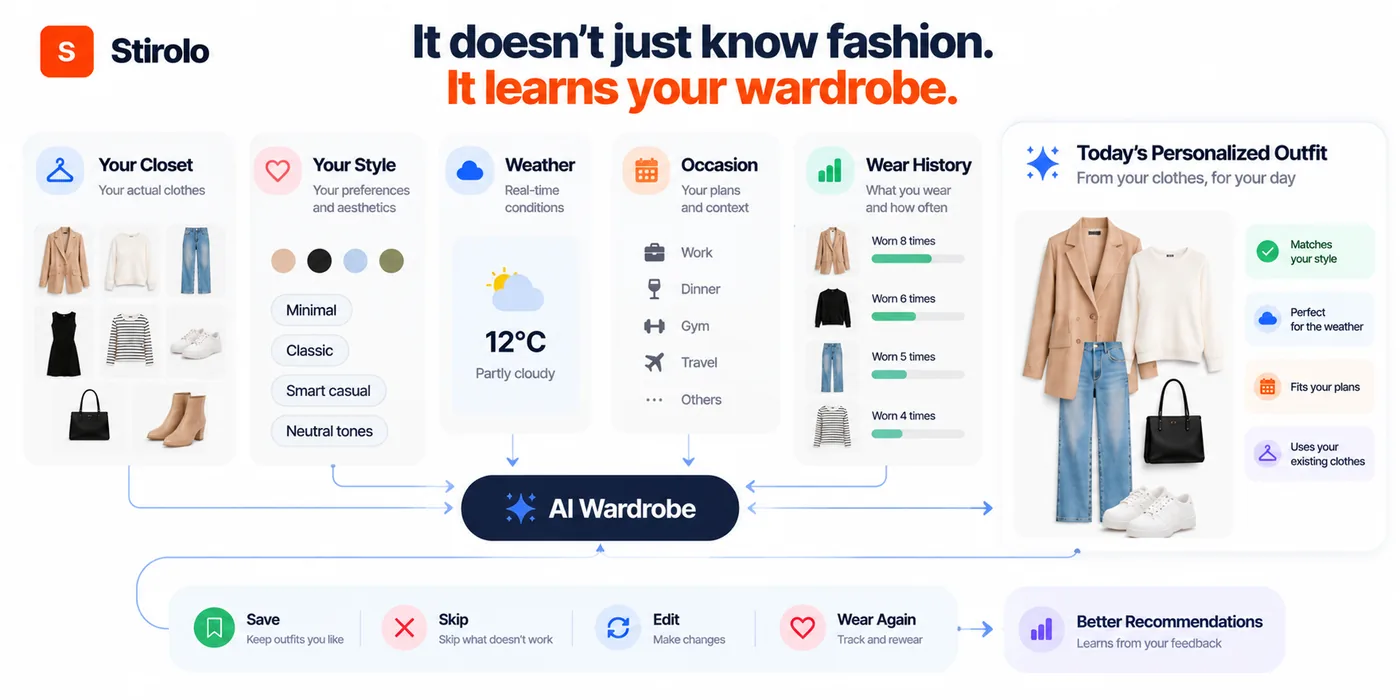
To create personalized outfits, an AI wardrobe filters your available garments against context and then ranks combinations. Useful context can include weather, occasion, dress code, color preferences, silhouette preferences, recent wear, and feedback on earlier suggestions.
A generic outfit generator might know that a navy blazer works with gray trousers. A personal AI wardrobe should also know whether you own those pieces, whether you like that combination, whether you wore it yesterday, and whether the day calls for formal clothing.
Stirolo shows this broader model in its AI styling process, which combines wardrobe information with body, taste, occasion, and environment signals before producing recommendations.
Feedback makes the system more personal. Saving, skipping, editing, and rewearing outfits can reveal preferences that a style quiz cannot capture fully. Repeated behavior provides stronger evidence than a one-time description of your taste.
Can an AI Wardrobe Help You Wear More of What You Own?
Yes. An AI wardrobe can help you wear more of what you own by making forgotten garments visible and suggesting combinations beyond your usual rotation. The benefit depends on whether you keep the wardrobe record current.
Wear tracking is especially useful. A system can record wear count, last worn date, outfit history, and cost per wear. Those signals can identify frequently used staples and pieces that rarely leave the closet.
The goal is not to force equal wear across every item. Formalwear, winter coats, and special-event pieces naturally appear less often. The useful question is whether an item receives appropriate use for its purpose and cost.
Wardrobe data can also support capsule planning. You can identify versatile anchors, repeated color relationships, missing basics, and garments that only work with one specific outfit.
Can an AI Wardrobe Help You Shop Less and Shop Better?
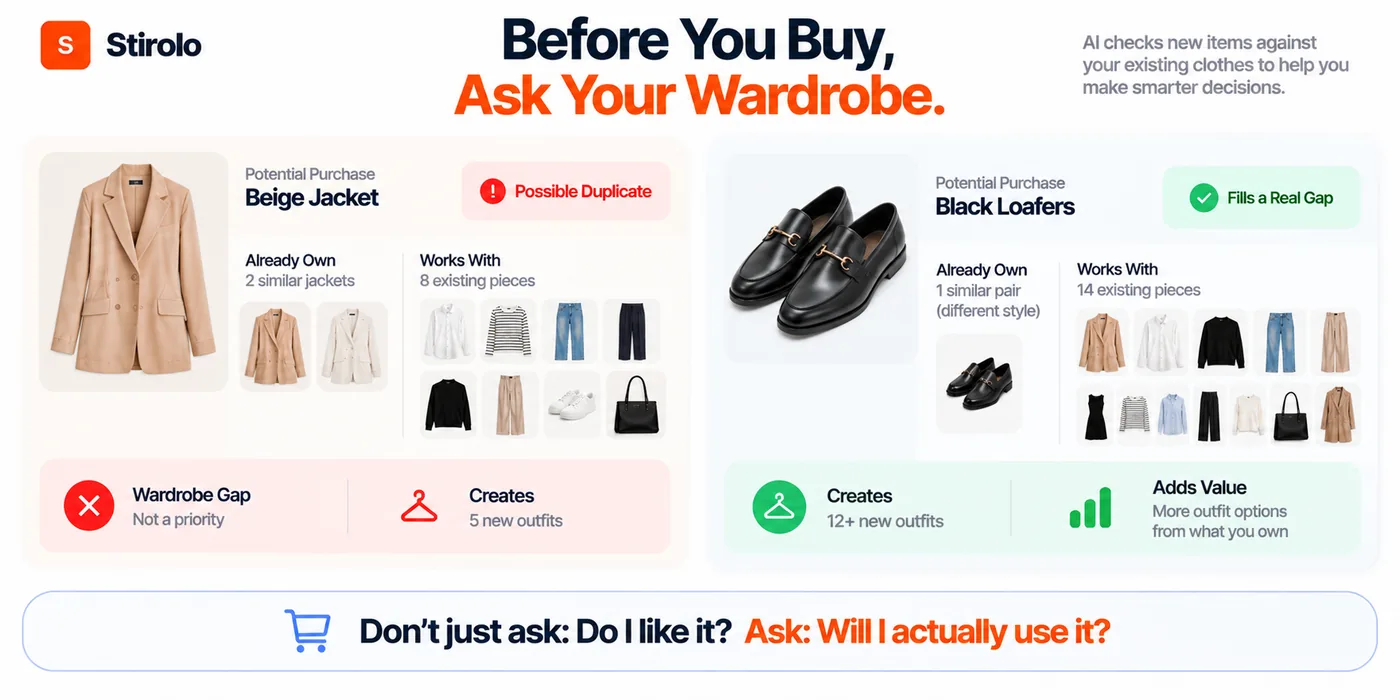
An AI wardrobe can support better shopping by checking a potential purchase against what you already own. The system can flag duplicates, identify genuine wardrobe gaps, and estimate how many existing pieces could work with a new item.
That changes the shopping question from “Do I like this?” to “Will I actually use this?” A visually appealing garment can still be a poor purchase if it duplicates 3 similar items or requires several additional purchases to become wearable.
More advanced wardrobe intelligence features can combine wear patterns, styling preferences, outfit recommendations, and shopping guidance in one system.
AI should not make the final purchase decision. Fabric feel, construction quality, exact fit, comfort, return policies, and personal priorities still require human judgment. Wardrobe data simply adds evidence before you buy.
How Accurate Are AI Wardrobe Recommendations?
AI wardrobe recommendations can be useful for color coordination, outfit variety, wardrobe retrieval, and context-aware planning. Accuracy becomes weaker when the system lacks reliable information about fit, fabric behavior, comfort, or personal preferences.
The quality of the wardrobe record matters. Incorrect tags produce poor filtering. Missing garments limit possible combinations. Generic preference data can create technically coordinated outfits that still feel unlike you.
Body-aware styling can improve proportion guidance, but a photo or body model cannot guarantee physical fit. Garment cut, stretch, fabric weight, sizing differences, and movement can change how clothing feels in real life.
Treat an AI wardrobe as a decision-support system rather than an unquestionable authority. The best recommendation is one that fits your context and gives you a useful starting point.
What Information Should You Give an AI Wardrobe?
Give an AI wardrobe accurate clothing records, style preferences, relevant body information, and contextual details. Better inputs reduce guesswork and make recommendations more specific.
Start with a clean wardrobe record
Photograph or import the clothes you realistically wear. Check categories, colors, seasons, and other tags. Archive sold, donated, damaged, or unavailable pieces so the system does not recommend them.
Add preferences the system cannot infer
Record disliked colors, preferred silhouettes, comfort limits, formality preferences, and recurring dress codes. Explicit constraints prevent the system from repeatedly suggesting combinations you will reject.
Use context for each recommendation
Provide the occasion, expected weather, activity level, and any practical requirements. A useful work outfit, travel outfit, and dinner outfit can require different shoes, layers, fabrics, and levels of formality.
What Are the Privacy Risks of an AI Wardrobe?
An AI wardrobe can contain sensitive personal data, including clothing photos, purchase history, body photos, measurements, location, calendar context, and style preferences. The exact data depends on the service and features you enable.
Before uploading personal information, check what the service collects, why it collects the data, how long the data is retained, whether information is shared with third parties, and whether you can delete your account data.
Body photos deserve extra care because they reveal more than ordinary product images. Use only the inputs required for features you actually want. Avoid assuming that every fashion app follows the same storage or privacy practices.
How to Set Up an AI Wardrobe That Stays Useful
To set up an AI wardrobe that stays useful, start with your most-worn clothes, verify the automatic tags, add personal preferences, and build a habit of recording what you actually wear.
- 1. Add your core wardrobe first. Start with 20-40 frequently worn pieces. A smaller accurate catalog is more useful than a large incomplete one.
- 2. Correct garment data. Check categories, colors, seasons, formality, and availability before relying on recommendations.
- 3. Set your style profile. Add preferred colors, silhouettes, comfort requirements, recurring occasions, and pieces you avoid.
- 4. Test recommendations against real days. Ask for work, weekend, dinner, travel, and weather-specific outfits instead of judging the system from one generic prompt.
- 5. Record feedback. Save strong outfits, reject weak suggestions, and log actual wear so the system can learn your behavior.
- 6. Review the wardrobe monthly. Archive unavailable clothes, add meaningful purchases, and check underused pieces before buying replacements.
Who Benefits Most From an AI Wardrobe?
An AI wardrobe is most useful for people who own enough clothes to create decision friction but still want to use what they already have. Busy professionals, frequent travelers, capsule wardrobe users, and people trying to reduce unnecessary shopping can gain clear value.
The technology also suits anyone who repeatedly wears the same small set because the rest of the closet is hard to remember or combine. Search, outfit history, and recommendations can make dormant clothing easier to rediscover.
An AI wardrobe may offer less value if you maintain a very small uniform wardrobe, dislike cataloging clothes, or do not want to share wardrobe data with an app. The setup must save more time than it creates.
A wardrobe-first platform such as Stirolo personal AI stylist extends the idea beyond cataloging by combining your clothes with body, taste, occasion, environment, and feedback signals. The result is a system designed around what you can actually wear, not a feed of clothes you need to buy.
Frequently Asked Questions About AI Wardrobes
Is an AI wardrobe the same as a digital closet?
No. A digital closet mainly stores and organizes clothing. An AI wardrobe analyzes the closet to generate outfits, plans, insights, or shopping guidance.
Can an AI wardrobe create outfits from clothes I already own?
Yes. Many AI wardrobe tools build recommendations from uploaded or imported wardrobe items, although features and accuracy vary by service.
Do I have to photograph every piece of clothing?
Not always. Some tools support batch photos, outfit photos, product links, receipts, or shopping-history imports. The available import methods depend on the platform.
Can an AI wardrobe tell me what clothes to buy?
Yes, some systems can identify wardrobe gaps or recommend purchases. You should still check fit, quality, budget, fabric, and whether the item works with your real wardrobe.
Can an AI wardrobe guarantee that an outfit will fit me?
No. AI can support proportion and styling decisions, but exact physical fit depends on garment measurements, fabric, cut, movement, and brand sizing.
Make Your Wardrobe Work Harder
An AI wardrobe turns a passive clothing catalog into an active decision tool. The most useful systems do more than store garment photos. They connect your clothes with your preferences, context, wear behavior, and daily needs.
Start with accurate wardrobe data and realistic expectations. Use AI to surface options, reduce repeated decisions, and test purchases against what you own. Keep your own judgment for comfort, exact fit, quality, and personal expression.
When the system learns from a real wardrobe instead of generic fashion images, AI can make getting dressed more practical without making your closet larger.
How Should You Evaluate an AI Wardrobe App?
Evaluate an AI wardrobe by how well it works with your real clothes, not by how impressive generated fashion images look. The core test is whether the system reduces daily effort and produces recommendations you can actually wear.
Start with import quality. Adding clothes should be fast enough that you will maintain the catalog. Automatic background removal, multi-item recognition, receipt imports, and product-link imports can reduce setup work. However, easy importing only helps if garment tags remain accurate and editable.
Next, test recommendation grounding. Ask whether suggested outfits use available garments, respect the stated occasion, respond to weather, and avoid pieces marked unavailable. A useful system should explain or at least reflect the context behind a recommendation instead of generating attractive combinations disconnected from your day.
Check learning behavior over time. If you reject the same silhouette several times, later suggestions should adapt. If the app keeps repeating unsuitable ideas, personalization may be shallow even if the interface looks advanced.
Finally, review privacy controls and export options. A wardrobe can become a detailed personal dataset. You should understand how to delete photos and account data, what happens to uploaded images, and whether you can leave the service without losing the wardrobe record you spent time building.
Does an AI Wardrobe Replace Personal Style?
No. An AI wardrobe can organize choices and reveal patterns, but personal style still comes from your preferences, identity, comfort, culture, and changing interests. The system works best when it gives you relevant options rather than dictating a single correct look.
You can also use recommendations as experiments. Try a suggested combination, change one piece, and record which version feels better. That process turns AI into a feedback tool. Your reactions teach the system while also helping you notice your own styling rules.
A useful AI wardrobe should become less generic as it learns. The aim is not to make everyone dress according to the same model. The aim is to reduce friction around a wardrobe that remains distinctly yours.