

Fashion tech combines fashion with digital tools, intelligent systems, advanced manufacturing, and connected materials. The field changes how you design, make, shop for, style, track, and reuse clothing.
The phrase covers much more than smartwatches or futuristic clothing. Fashion technology includes artificial intelligence, virtual try-on, 3D design, body scanning, digital wardrobes, Radio Frequency Identification (RFID), and smart textiles. If you ask what is fashion tech in practical terms, think about technology solving a clothing, styling, production, retail, or wardrobe problem.
People often search what is fashion tech because the term has no single narrow use. A designer can use fashion tech to create a digital sample. A retailer can use fashion tech to personalize recommendations. You can use fashion tech to organize your closet or plan an outfit.
What Is Fashion Tech and What Does the Term Include?
Fashion tech means technology applied to the creation, production, sale, use, or management of fashion products. The definition covers both physical technologies and software systems.
Fashion technology operates across the full clothing lifecycle. Designers use Computer-Aided Design (CAD), 3D simulation, and generative systems. Manufacturers use automated cutting, digital printing, and production software. Retailers use virtual fitting, visual search, and recommendation engines. Consumers use styling apps, wardrobe tools, and connected garments.
The term also has an older educational meaning. Some fashion technology programs focus on patternmaking, garment construction, textile science, and production engineering. Digital fashion tech expands that scope with software, data, electronics, and artificial intelligence.
A useful definition asks 1 question: what fashion problem does the technology solve? That question separates useful systems from technology added only for novelty. People asking what is fashion tech often need this distinction because the category includes both industry systems and consumer tools.
What Problems Does Fashion Tech Actually Solve?
Fashion tech solves specific problems in design, fit, production, shopping, styling, inventory, and garment traceability. Useful fashion technology starts with a measurable need.
For designers, physical sampling consumes time and materials. 3D garment simulation lets teams review shape, drape, and construction digitally before producing samples. For retailers, online shoppers cannot physically try clothing before purchase. Virtual try-on and fit systems reduce that information gap.
For consumers, the problem often starts after purchase. You can own many garments and still struggle to build outfits. Digital wardrobes and AI styling systems can organize items, identify combinations, and consider context such as weather or occasion. This consumer angle gives a practical answer to what is fashion tech beyond factories and online stores.
For supply teams, inventory visibility creates another challenge. RFID tags, Near Field Communication (NFC), and digital product records can identify items across warehouses, stores, and later lifecycle stages.
What Are the Main Types of Fashion Technology?
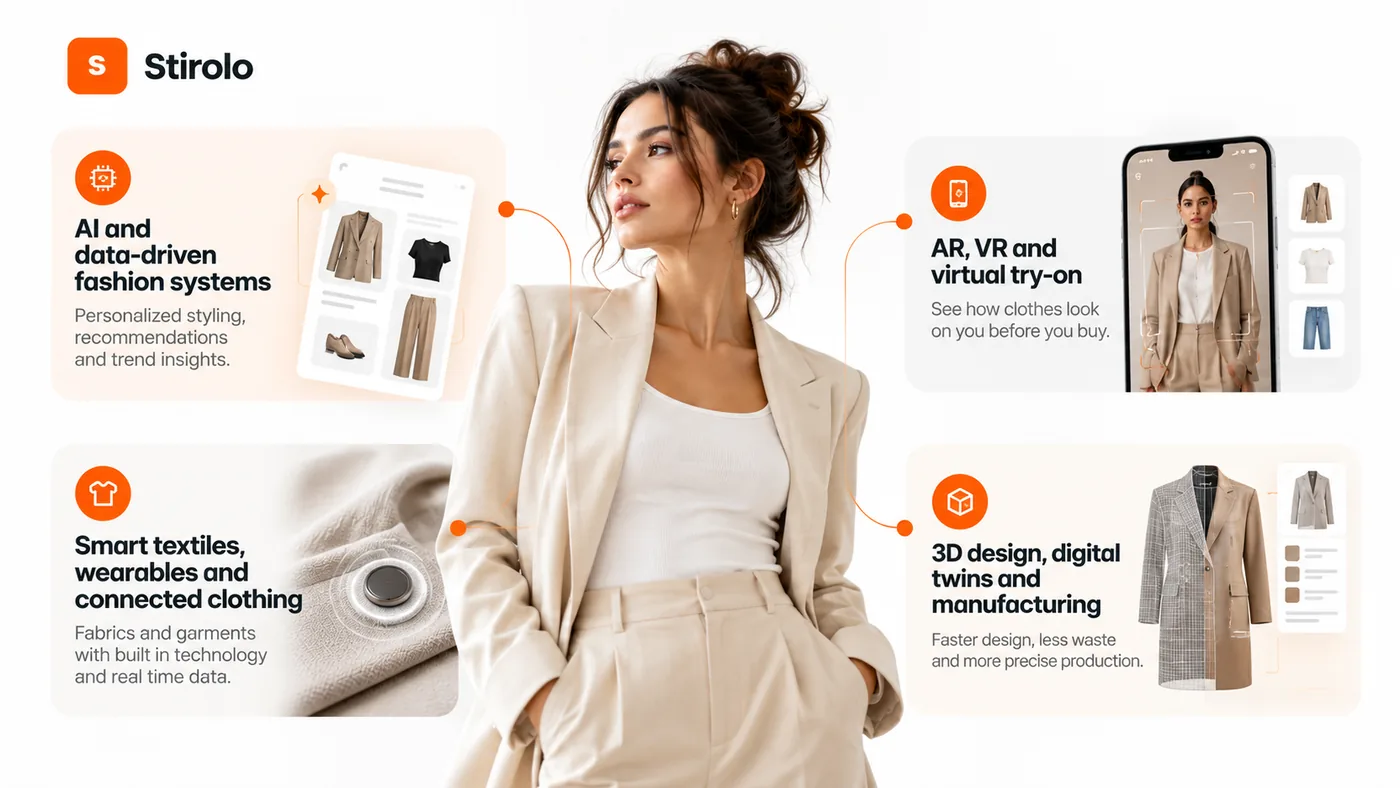
Fashion tech falls into 4 practical groups: intelligent software, immersive experiences, connected products, and digital production systems. Each group addresses different fashion decisions. If someone asks what is fashion tech, these 4 groups provide a useful map.
AI and Data-Driven Fashion Systems
Artificial intelligence (AI) analyzes patterns across images, product data, preferences, demand, and user behavior. Fashion companies use machine learning for recommendations, forecasting, visual search, product tagging, and design support.
Consumer tools use similar methods for personal styling. A system can compare your wardrobe, preferences, fit information, occasion, and environment before suggesting an outfit. Stirolo describes an AI styling workflow that combines body, wardrobe, taste, occasion, and environment data.
AR, VR, and Virtual Try-On
Augmented Reality (AR) places digital fashion elements over a live or captured view. Virtual Reality (VR) creates a fully digital environment. Virtual try-on uses image processing, computer vision, AR, or generative models to preview products on a person or avatar.
Virtual try-on helps answer a visual question before purchase or wear. The preview does not always prove physical fit, fabric feel, or exact drape. You should treat a visual preview as decision support rather than a tailoring measurement.
Smart Textiles, Wearables, and Connected Clothing
Smart textiles add functions to fibers or fabrics. Named functions include temperature sensing, motion tracking, pressure sensing, heating, and biometric monitoring. Wearable products include smartwatches, sensor-equipped garments, connected footwear, and fitness bands.
Wearable technology forms one branch of fashion tech. Fashion tech also includes software and production systems that never become part of a garment. That wider scope matters when you define what is fashion tech.
3D Design, Digital Twins, and Manufacturing Technology
3D garment tools create digital versions of patterns and clothing. Digital twins represent products with structured digital information. Designers can test silhouettes, colors, construction details, and fabric behavior before cutting physical material.
Manufacturing technology includes automated cutting, laser cutting, digital textile printing, knitting systems, robotics, and 3D printing. Each method targets a production task rather than personal styling.
How Is AI Used in Fashion Tech?
AI supports fashion design, product discovery, demand planning, fit analysis, styling, and wardrobe management. AI works best when the system receives relevant, structured data. AI now shapes many answers to the question what is fashion tech.
AI for Design and Product Development
Generative AI can produce concept images, variations, color directions, and early design ideas. Computer vision can classify garment features such as color, category, pattern, and shape. Forecasting models can analyze historical sales and demand signals.
Human designers still control product requirements, materials, construction, brand direction, and final approval. AI speeds selected tasks but does not remove the need for fashion knowledge.
AI for Shopping, Fit, and Personal Styling
Recommendation systems rank products or outfits using information such as preferences, product attributes, context, and behavior. Body-analysis systems can add proportion or fit information. Styling assistants can answer questions about occasions, combinations, colors, and dress codes.
Generic recommendations often fail because generic systems lack your real wardrobe and personal context. Closet-aware tools narrow the recommendation space to clothing you can actually wear.
AI for Wardrobe Management After Purchase
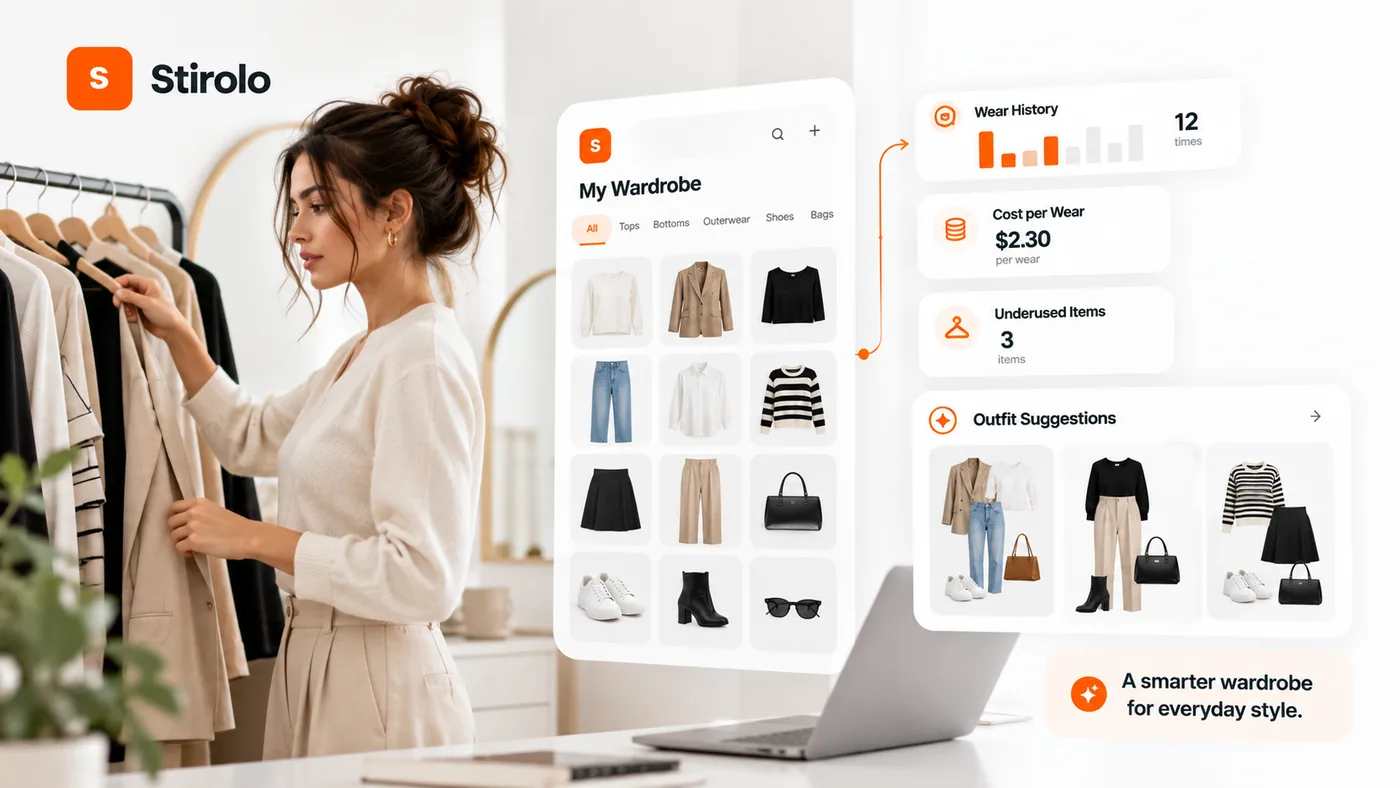
Post-purchase fashion tech addresses a neglected part of the fashion lifecycle. Digital wardrobe systems can catalog garments, record wear history, calculate cost per wear, and surface underused items.
You can also learn clothing principles through practical style guides covering capsule wardrobes, fit, color, seasons, travel, and dress codes. Personal knowledge helps you judge automated recommendations rather than accepting every suggestion.
How Does Fashion Tech Affect You as a Consumer?
Consumer fashion tech reduces information gaps before purchase and decision friction after purchase. The strongest tools help you make a defined decision faster. For shoppers asking what is fashion tech, consumer tools make the category easier to understand.
Before purchase, technology can support search, sizing, visualization, authenticity checks, and product information. After purchase, technology can support outfit planning, wardrobe organization, wear tracking, packing, and shopping checks.
The post-purchase category matters because buying a garment does not guarantee useful wear. A digital wardrobe can show what you already own before another purchase. An outfit planner can suggest combinations using existing pieces. A packing tool can build outfits around a trip rather than a generic checklist.
Personalization also changes the quality of fashion advice. Generic advice describes what usually works. Personal systems can consider your actual items, fit preferences, schedule, climate, and style choices.
What Is the Difference Between Fashion Tech, Digital Fashion, and Wearable Tech?
Fashion tech is the broad category; digital fashion and wearable technology are narrower categories inside or beside that ecosystem. The terms overlap, but the terms do not mean the same thing. This distinction prevents confusion when you research what is fashion tech.
Digital fashion focuses on computer-generated clothing, virtual garments, digital product creation, avatars, and virtual representations. A digital garment can represent a physical product or exist only in a digital environment.
Wearable technology places electronic or computational functions on the body. Smartwatches, sensor shirts, connected rings, and smart footwear fit that definition.
Fashion tech includes both categories plus AI styling, 3D design, retail technology, manufacturing automation, traceability, digital wardrobes, and supply-chain systems.
Quick Reference: Which Fashion Technology Solves Which Task?
Match the technology to the task before judging its value. The table below maps common tasks to practical methods and typical setup difficulty.
| Task | Typical Timing | Method | Difficulty |
|---|---|---|---|
| Preview an outfit | Before wearing | Virtual try-on, outfit visualization | Low |
| Plan daily outfits | Daily | AI stylist, digital wardrobe | Low |
| Test garment design | Before sampling | 3D garment simulation, CAD | Medium |
| Track store inventory | Continuous | RFID, NFC, inventory software | Medium |
| Add garment functions | During product design | Smart textiles, flexible electronics | High |
| Verify product history | Across lifecycle | Digital identity, traceability records | Medium |
How to Judge Whether Fashion Technology Is Actually Useful
To judge fashion technology, start with the problem, required data, measurable outcome, and user effort. A fashionable label does not prove practical value. A useful answer to what is fashion tech must explain outcomes, not just list technologies.
- Start with one defined problem, such as poor fit, slow sampling, unused clothing, or inventory errors.
- Check the required inputs, such as body photos, garment images, product records, measurements, or sales data.
- Measure one outcome, such as setup time, recommendation relevance, sample reduction, wear frequency, or search time.
- Compare the effort against the benefit. A tool that saves 2 minutes but requires 20 minutes of daily logging creates friction.
- Review privacy and data controls before uploading body images, purchase histories, or wardrobe records.
Fashion tech works when technology improves a real fashion task. The same rule applies to a consumer app, a factory system, or a retail platform. That problem-first test gives what is fashion tech a practical meaning.
Can Fashion Tech Support More Sustainable Fashion Decisions?
Yes. Fashion tech can support lower-waste decisions when the technology changes production, purchasing, use, or recirculation. Technology alone does not make a fashion product sustainable. Sustainability is one reason people ask what is fashion tech and why the category matters.
3D sampling can reduce some physical prototypes. Demand systems can help teams plan production quantities. Traceability tools can organize product and supplier information. Digital wardrobes can help consumers see existing options before buying duplicates.
Wardrobe intelligence adds a practical consumer angle. Wear counts and cost-per-wear records can reveal which garments earn regular use. Outfit generation can create new combinations from existing clothes. Shopping checks can identify overlap with items already owned.
Sustainability claims still require evidence. Energy use, material sourcing, product durability, logistics, and actual consumer behavior affect the final impact. Fashion tech should support better decisions rather than replace environmental measurement.
What Careers Exist in Fashion Technology?
Fashion tech careers combine fashion knowledge with software, data, engineering, digital design, product, or operations skills. You do not need to fit one professional background. Career questions also shape search intent around what is fashion tech.
Technical roles include software engineer, machine-learning engineer, data scientist, computer-vision engineer, and AR developer. Fashion-facing roles include 3D garment designer, digital pattern specialist, technical designer, merchandiser, and textile developer. Product roles include product manager, UX designer, e-commerce specialist, and digital transformation lead.
Hybrid skills create particular value because fashion systems connect physical products with digital information. A developer benefits from understanding sizing and garment data. A designer benefits from understanding 3D tools and structured product workflows.
Build career evidence around applied work. Named projects can include a virtual closet prototype, a 3D garment portfolio, a fit-analysis tool, a product recommendation system, or a traceability workflow.
What Does the Future of Fashion Tech Look Like?
Fashion tech will become more contextual, connected, and embedded across the clothing lifecycle. The strongest direction links product data with individual needs rather than adding isolated features. Future-focused searches for what is fashion tech increasingly center on AI, personalization, and connected product data.
AI systems will increasingly combine more context, including garment attributes, body information, preferences, weather, occasions, and wear history. Better context can make recommendations more relevant and reduce generic output.
Digital product records can also connect design, manufacturing, retail, ownership, repair, and resale information. 3D assets can move from product development into commerce and visualization. Smart materials can add functions without changing familiar garment forms.
For consumers, fashion tech can shift from shopping assistance toward wardrobe intelligence. The useful question becomes less about what to buy next. The useful question becomes how to dress well with the wardrobe you already own.
Frequently Asked Questions About Fashion Tech
Is Fashion Tech the Same as Wearable Technology?
No. Wearable technology covers connected products worn on the body. Fashion tech also includes AI, 3D design, retail systems, digital wardrobes, manufacturing, and traceability.
Is AI Considered Fashion Tech?
Yes. AI becomes fashion tech when a system applies AI to fashion tasks such as design, recommendations, fit, forecasting, visual search, or styling. AI therefore forms one major part of what is fashion tech today.
Is Virtual Try-On Fashion Tech?
Yes. Virtual try-on uses technologies such as computer vision, AR, 3D assets, or generative models to preview fashion products digitally.
Do You Need Coding Skills for a Fashion Tech Career?
No. Fashion tech also needs 3D designers, technical designers, product managers, merchandisers, textile specialists, UX designers, and operations professionals.
Can Fashion Tech Help You Use Clothes You Already Own?
Yes. Digital wardrobes and AI styling tools can organize existing clothes, recommend combinations, track wear, and support shopping decisions based on your closet.
Fashion Tech Connects the Whole Fashion Lifecycle
Fashion tech covers far more than futuristic clothing. The category connects design, manufacturing, retail, styling, ownership, and garment information through technology. If a friend asks what is fashion tech, the clearest answer starts with that full lifecycle.
The best way to understand what is fashion tech is to focus on the problem each system solves. AI styling addresses decision-making. Virtual try-on addresses visualization. 3D design addresses development. RFID addresses identification. Smart textiles add functions to physical materials.
For your own wardrobe, the most useful fashion technology can start with clothes you already own. You can explore Stirolo features to see how wardrobe management, AI styling, outfit visualization, and shopping guidance connect inside one personal styling system.