
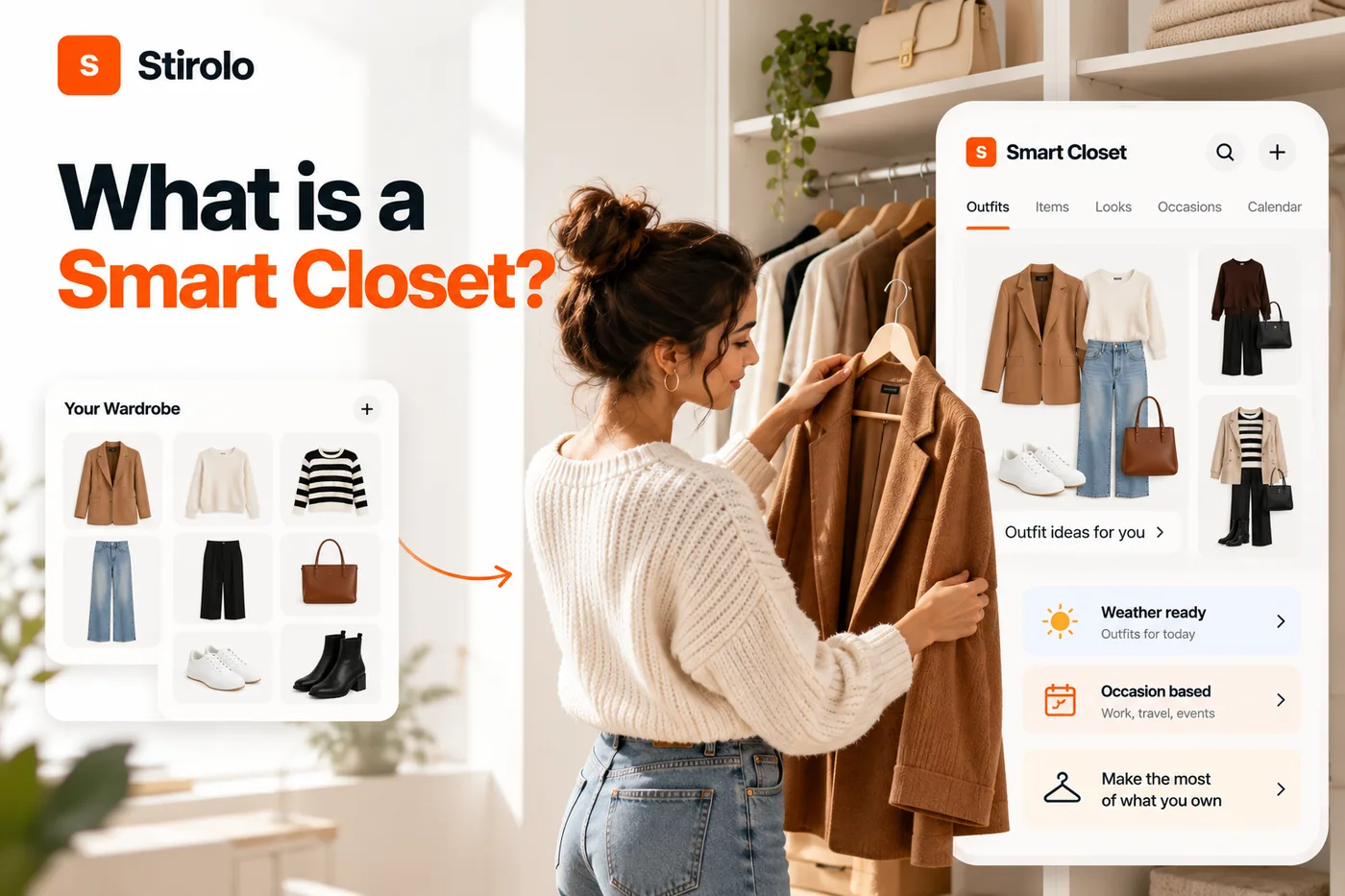
A smart closet is a digital system that helps you organize, understand, and use the clothes you already own. Unlike a simple photo gallery, a useful smart closet can turn wardrobe data into outfit plans, wear insights, search tools, and personalized styling suggestions.
You usually build one by photographing or importing clothing items into an app. The app creates a searchable wardrobe, then uses information such as category, color, season, occasion, wear history, and personal preferences to make the closet easier to use.
Some smart closets rely mainly on manual organization. More advanced systems add Artificial Intelligence (AI) for garment recognition, automatic tagging, outfit recommendations, weather-aware planning, body-aware styling, or virtual outfit previews.
The value is not the digital inventory by itself. A smart closet becomes useful when the information changes a real decision: what to wear, what to pack, what to rewear, what to remove, or whether a new purchase actually fills a gap.
How Does a Smart Closet Work?
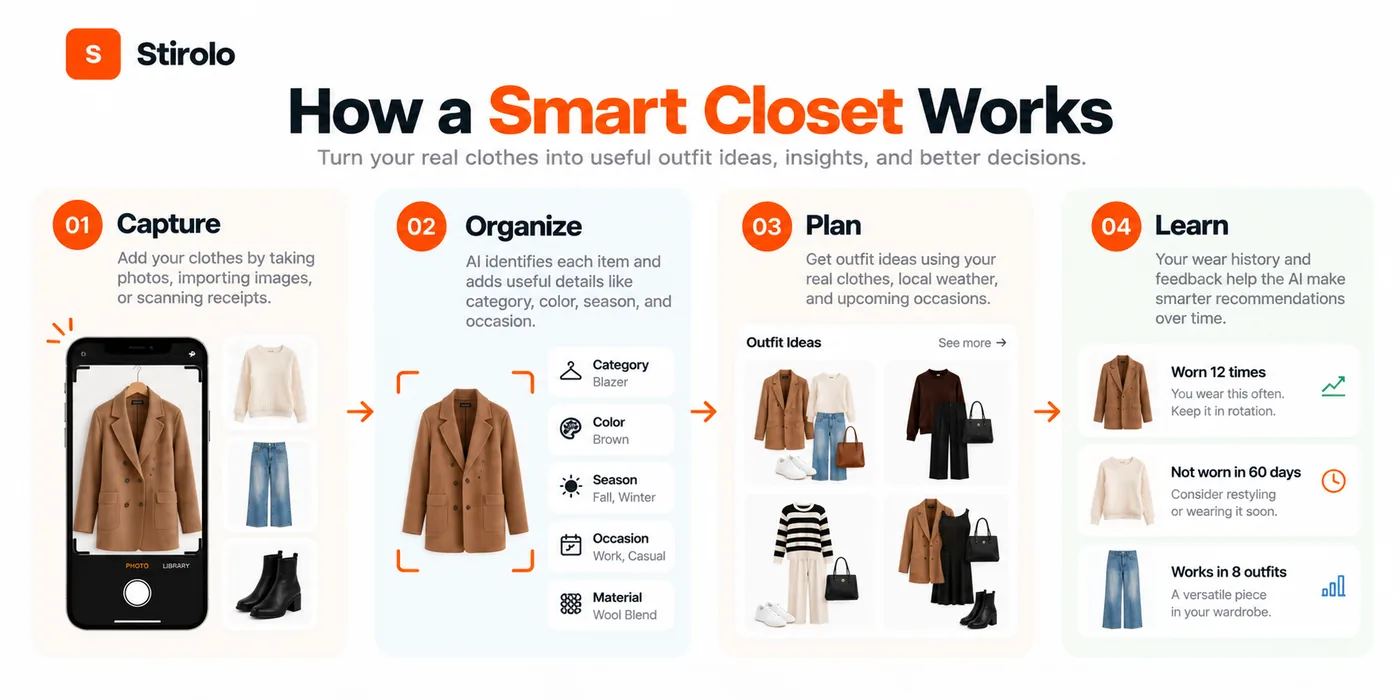
A smart closet works by converting your physical wardrobe into structured digital information, then using that information to support daily clothing decisions. The workflow usually has four parts: capture, organize, plan, and learn.
1. You Add Clothing to a Digital Wardrobe
You photograph individual garments, import product images, scan receipts, or use another supported import method. The goal is to create one digital record for each useful wardrobe item.
Modern wardrobe tools can remove image backgrounds and recognize basic garment properties. Computer vision can identify details such as item type, dominant color, pattern, and formality, although recognition quality varies between products.
2. The Closet Organizes Each Item
Each garment receives searchable information. Common fields include category, color, season, brand, price, occasion, size, material, and wear history.
Good organization matters because recommendations depend on accurate wardrobe records. A black blazer incorrectly tagged as casual outerwear can produce poor search results and weaker outfit suggestions.
3. The System Helps Build Outfits
A basic system lets you manually combine pieces and save looks. A more advanced system can rank combinations based on your preferences, occasion, weather, recent wear, or other available signals.
You can see a detailed example of this workflow in Stirolo's AI styling process, which moves from wardrobe setup to ranked outfit recommendations and feedback.
4. Your Usage Creates Better Wardrobe Data
Wear history makes the closet more informative over time. The system can identify frequently worn pieces, neglected items, repeated combinations, and gaps between what you buy and what you actually use.
What Is the Difference Between a Smart Closet and a Digital Wardrobe?
A digital wardrobe is a digital representation of your clothes. A smart closet uses that representation to help you make decisions.
The terms often overlap because many wardrobe apps combine both functions. The practical difference is what happens after you upload your clothing.
A basic digital wardrobe may let you browse shirts, trousers, shoes, and accessories on one screen. A smart closet can add outfit planning, calendar tools, wear statistics, packing support, shopping checks, recommendations, or AI styling.
A virtual closet is another common term for the same general category. The label matters less than the workflow. Ask whether the tool helps you use your real wardrobe better after the catalog is complete.
What Can a Smart Closet Track?
A smart closet can track far more than clothing photos. The most useful data connects wardrobe ownership with wardrobe behavior.
Common records include item category, color, season, formality, purchase price, wear count, last-worn date, saved outfits, planned outfits, and cost per wear. Some systems also track fit preferences, body information, climate, travel needs, and style feedback.
You do not need every possible field. Track information that answers questions you actually ask. Season tags help if you rotate clothing. Occasion tags help if your week spans different dress codes. Wear counts help if you want to understand wardrobe value.
Cost per wear can be especially revealing. A $240 coat worn 80 times costs $3 per wear. A $60 top worn twice costs $30 per wear. The cheaper purchase did not necessarily create better wardrobe value.
How Does AI Make a Smart Closet Smarter?
AI can reduce manual setup and turn wardrobe records into personalized recommendations. The quality depends on the data available and the way the system uses that data.
Computer Vision Can Recognize Clothing
Computer vision analyzes garment images and can suggest categories, colors, patterns, and other visual attributes. Automatic recognition reduces the amount of typing required during setup.
Recommendation Systems Can Rank Outfits
Recommendation systems compare possible combinations against relevant signals. Those signals can include your style preferences, wardrobe inventory, occasion, weather, recent wear, and feedback on previous suggestions.
This is where an AI-powered closet differs from a random outfit generator. Random combinations only need compatible categories. Personalized recommendations need information about you and your actual wardrobe.
Feedback Can Improve Future Suggestions
Saving, skipping, editing, and rewearing outfits can create preference signals. A system can use those signals to reduce combinations you dislike and prioritize patterns you repeatedly choose.
Stirolo combines wardrobe information with body, taste, occasion, and environment data across its personal styling features. That broader context helps explain why smart-closet intelligence can go beyond simple cataloging.
How to Build a Smart Closet Without Uploading Everything at Once
To build a smart closet without uploading everything at once, start with the clothes you wear most often. Add enough pieces to represent a normal week, then expand the catalog as you use other items.
A practical starting set is 20 to 30 pieces across your main categories. Include everyday tops, bottoms, layers, shoes, and the accessories that materially change outfits. Add special-occasion or seasonal pieces when they become relevant.
This approach lowers setup friction. Photographing 100 or 200 garments in one session can turn wardrobe organization into a project you abandon before receiving any benefit.
Use a simple capture routine. Photograph an item when you wear it, wash it, unpack it for a new season, or consider replacing it. The digital closet gradually catches up with the physical one.
Correct obvious tagging errors during entry. Do not spend several minutes perfecting metadata that you will never search or use.
How Does a Smart Closet Help You Plan Outfits?
A smart closet helps you plan outfits by showing compatible pieces together and connecting those combinations to real situations. Planning can happen manually through saved looks or automatically through recommendation tools.
For a workday, the system might filter for office-appropriate items and current weather. For a dinner, the same wardrobe can produce a different formality level. For travel, outfit planning can prioritize pieces that work across several days.
An outfit calendar can also reduce morning decisions. You can plan several looks in advance and change only what no longer fits the weather or schedule.
The strongest systems treat an outfit as more than matching colors. Silhouette, fit, temperature, dress code, repeat wear, footwear, and personal preference can all affect whether a combination works in practice.
Can a Smart Closet Help You Wear More of What You Own?
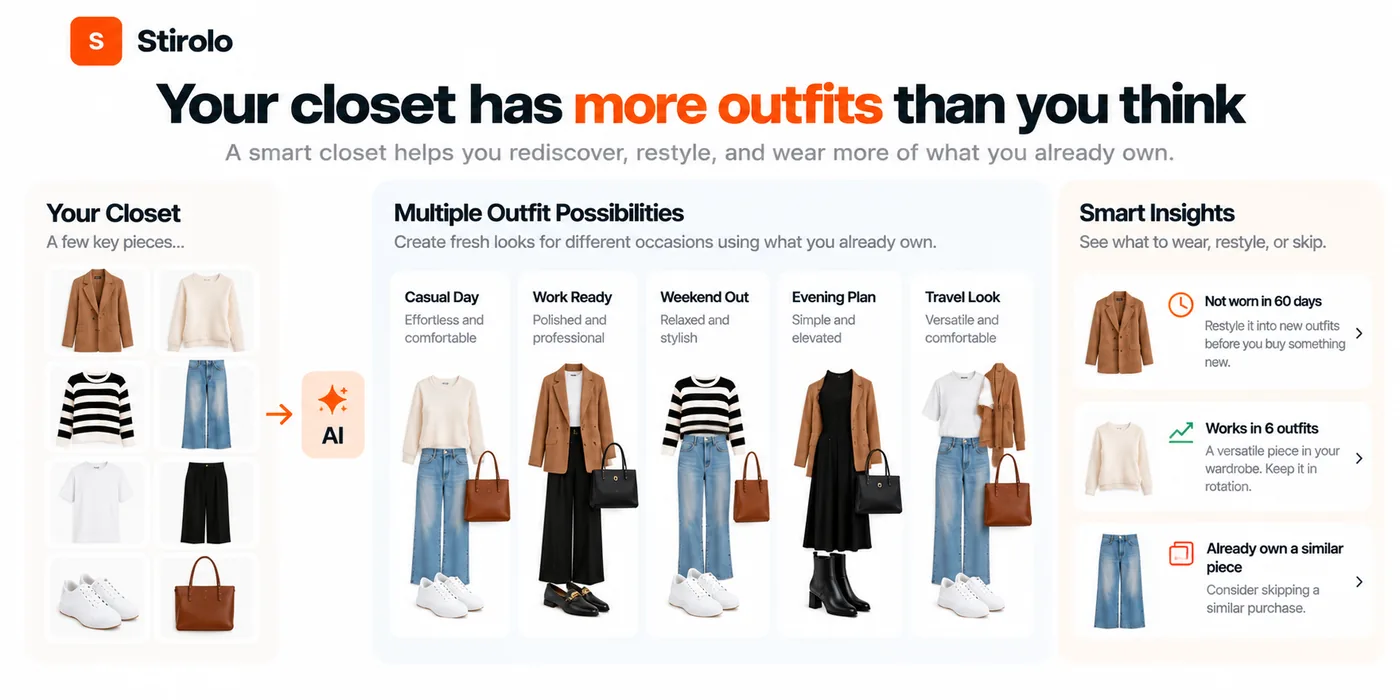
Yes. A smart closet can help you wear more of what you own by making forgotten items visible and showing new combinations for pieces already in your wardrobe.
Physical closets hide information. Clothes sit behind other clothes, move between drawers, or disappear from your active rotation. A searchable catalog makes the full wardrobe visible at once.
Wear data adds another layer. An item with no recent wears may deserve a new combination, alteration, seasonal storage, resale, donation, or removal. The right decision depends on why the item is unused.
That distinction matters. Low wear does not automatically mean an item is bad. Formalwear, heavy coats, and specialist sports clothing may have legitimate low-frequency roles.
For a more evidence-based cleanout, Stirolo's wardrobe declutter workflow uses wear and outfit data to separate useful pieces from genuine dead weight.
How Can Smart Closet Data Improve Shopping Decisions?
Smart closet data can improve shopping decisions by showing what you already own before you add another item. That visibility helps identify duplicates, missing categories, weak color matches, and purchases that have few realistic outfit partners.
Before buying a jacket, check how many existing trousers, skirts, shoes, or layers work with it. A beautiful item that creates only one usable outfit may contribute less than a simpler piece that creates eight.
Wardrobe analytics can also expose buying habits. You may discover that you repeatedly buy statement tops while wearing neutral knitwear most days. Another user may own many shoes but lack weather-appropriate outerwear.
A smart closet should not encourage shopping simply because the technology can recommend products. The better question is whether a proposed purchase improves the wardrobe you already have.
Does a Smart Closet Work for Capsule Wardrobes?
Yes. Smart closets work well for capsule wardrobes because a small wardrobe depends on high compatibility between pieces.
A digital catalog makes it easier to check how many outfits each item supports. Wear tracking can show whether the capsule reflects your actual life instead of an idealized clothing list.
For example, a 35-item capsule can still fail if 10 items serve rare occasions while your weekly workwear lacks enough combinations. The item count looks disciplined, but the wardrobe does not match demand.
Smart closet data can also help during seasonal swaps. You can archive warm-weather items digitally, reactivate cold-weather pieces, and preserve outfit records without rebuilding the system each season.
Quick Reference: What a Smart Closet Can Do
| Task | Typical Timing | Method | Difficulty |
|---|---|---|---|
| Add clothing | Initial setup | Photos, imports, or receipts | Medium |
| Find an item | Seconds | Search and filters | Easy |
| Build outfits | Daily or weekly | Manual or AI suggestions | Easy |
| Track wear | Ongoing | Wear history and calendar | Easy |
| Review wardrobe | Monthly or seasonal | Analytics and usage data | Easy |
| Check a purchase | Before buying | Gap and duplicate review | Easy |
What Are the Limitations of Smart Closet Apps?
Smart closet apps still depend on accurate inputs. Missing garments, incorrect tags, outdated sizes, and incomplete wear records can weaken recommendations and analytics.
AI also cannot reliably understand every detail that affects comfort. Fabric feel, a waistband that becomes uncomfortable after 4 hours, a shoe that causes blisters, or a jacket that restricts movement may not be obvious from an image.
Virtual try-on and outfit visualization can help you compare directions, but a generated image is not a guarantee of physical fit. Real fabric drape, stretch, construction, and tailoring still matter.
Setup is another limitation. Even with automatic tagging, creating a useful digital wardrobe takes effort. The best strategy is to capture enough clothing to receive value early, then improve the catalog over time.
Finally, recommendations can become generic if the system knows the garments but not the wearer. A useful smart closet should account for personal taste and context instead of treating everyone with similar clothing as interchangeable.
Is Smart Closet Data Private?
Privacy depends on the specific service. A smart closet can contain clothing photos, purchase information, wear habits, body photos, measurements, location data, calendar context, or personal style preferences.
Check what the service collects, why the service needs each data type, how long information is retained, whether information is shared, and whether you can export or delete your data.
Body images deserve particular attention because body-aware styling and virtual visualization may require more sensitive inputs than a basic wardrobe organizer.
Do not assume that every smart closet uses the same privacy model. Read the current privacy policy of the service you choose before uploading information you consider sensitive.
Frequently Asked Questions About Smart Closets
Is a smart closet the same as a smart wardrobe?
Yes, in most consumer fashion contexts. Both terms usually describe a digital wardrobe system that organizes clothing and adds planning, analytics, or recommendation features.
Do I need to upload my entire wardrobe?
No. Start with the pieces you wear most often. Add the rest gradually as different clothes enter your normal rotation.
Can a smart closet choose outfits for me?
Yes, if the service includes outfit recommendations. Recommendation quality improves when the system has accurate wardrobe, preference, occasion, and weather information.
Can a smart closet reduce unnecessary shopping?
Yes. A complete wardrobe view can reveal duplicates, underused items, and missing outfit partners before you buy another piece.
Is a smart closet useful if I own only a few clothes?
Yes. A smaller wardrobe can benefit from outfit planning because each piece needs to work across more combinations, occasions, and seasons.
A Smart Closet Should Make Your Real Wardrobe More Useful
A smart closet is most valuable when it changes how you use the clothes you already own. Digital organization is the foundation, not the final goal.
The useful outcome is clearer wardrobe visibility, faster outfit decisions, better rewear, more deliberate shopping, and evidence about which pieces genuinely support your life.
AI can make that process faster by recognizing garments, ranking combinations, learning preferences, and adding context. AI does not remove the need for your judgment. Your comfort, identity, taste, and real experience remain the final filter.
If you want a smart closet that connects wardrobe management with personalized styling, explore Stirolo and start by turning the clothes you already own into a wardrobe you can actually use.