
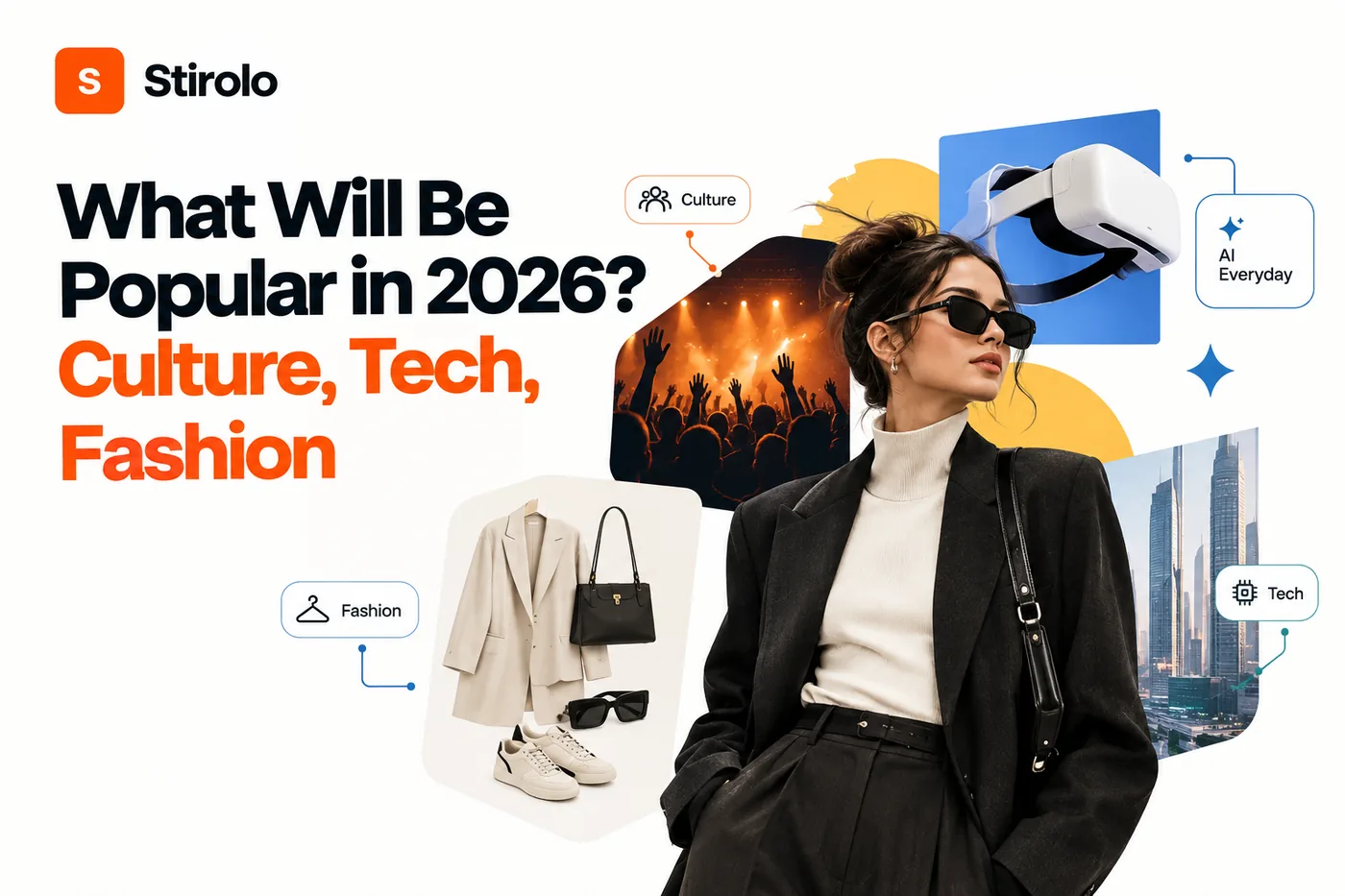
What will be popular in 2026 culture, tech and fashion? The clearest direction is more personal expression supported by smarter technology. Fashion is becoming more colorful and individual, while AI is changing discovery, styling and shopping.
The shift does not mean every minimalist wardrobe suddenly becomes obsolete. Quiet, durable basics still matter. The difference is that 2026 gives people more permission to add texture, color, unusual proportions and recognizable personal signatures. Technology is also becoming less separate from style. AI assistants, smart eyewear and wardrobe intelligence increasingly sit inside everyday decisions rather than novelty demos.
What Will Be Popular in 2026 Across Culture, Tech and Fashion?
The strongest 2026 signal is individuality rather than one dominant aesthetic. Current runway and street-style reporting shows expressive dressing gaining ground after several seasons of restrained minimalism. Vogue has highlighted personality-driven looks, richer textures, bold color and playful proportions across 2026 collections.
Technology follows a similar pattern. AI is moving from a separate tool into a layer that helps people search, compare, style and buy. McKinsey identifies the “AI shopper” and smart frames as major consumer shifts for fashion in 2026. Culture adds another layer: people still live online, but many also want slower experiences, smaller communities and more meaningful offline moments.
These forces point in the same direction. People want technology to reduce friction without flattening identity. They want fashion to feel useful without becoming uniform. They want trends to offer inspiration without dictating an entire personality.
Why Is Fashion Moving Beyond Quiet Luxury in 2026?
**Quiet luxury is not disappearing, but its monopoly on “good taste” is weakening.** Minimal silhouettes, quality materials and seasonless basics remain useful. The newer direction adds emotion and visible personality to that foundation.
Vogue’s 2026 reporting describes a move toward playful color, texture and self-expression. Fall collections also combine clean shapes with richer surfaces, volume and unexpected details. Shanghai Fashion Week coverage similarly noted fatigue with clean-fit uniformity and renewed interest in romanticism and emotional texture.
The practical result is not a compulsory swing from beige to maximalism. A restrained wardrobe can evolve through one strong accessory, a saturated knit, an unusual scarf, dimensional jewelry or a more distinctive silhouette. The important change is permission to look specific rather than universally tasteful.
Which Fashion Trends Are Defining 2026?
Expressive Color and Texture
Color is becoming a stronger styling tool. Recent 2026 coverage has highlighted saturated purple, pink, retro prints and tactile finishes. Texture matters because it creates visual interest without requiring a complicated outfit. Brocade, fringe, lace, dimensional florals and rich knits can make familiar silhouettes feel new.
Statement Accessories With Familiar Clothes
Accessories are carrying more of the personality. Brooches, scarves, jewelry and distinctive belts can update clothes already in your wardrobe. This approach fits a broader value-conscious mood because one accessory can change several existing outfits.
Wearable Clothes With One Unexpected Element
Many 2026 collections balance practicality with surprise. Tailoring remains relevant, but proportions shift. Familiar shirts, trousers, coats and dresses appear with volume, drape, peplums, fringe or unusual layering. The strongest looks often keep one recognizable base and change one variable.
How Is AI Changing Fashion Discovery and Shopping in 2026?
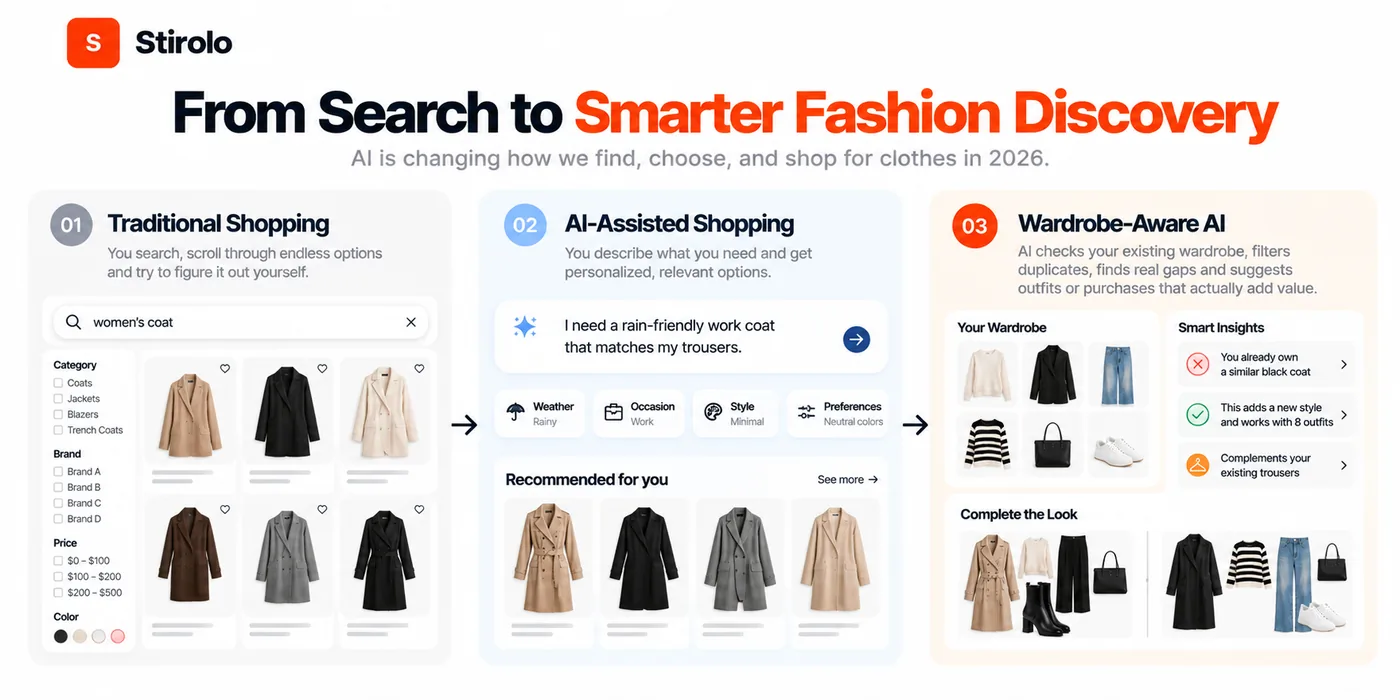
**AI is becoming a decision layer between the shopper and the fashion market.** McKinsey reports that consumers increasingly use AI assistants for product advice, comparison and brand discovery. The next step is agentic shopping, where software can monitor products, narrow options and eventually complete more tasks for the user.
That change matters because fashion discovery has traditionally depended on search bars, social feeds, store navigation and ads. Conversational AI can start with a need instead: “I need a rain-friendly work coat that matches my existing trousers.” A useful system can interpret the request before presenting options.
Personal styling is developing in the same direction. A generic AI can suggest a trend. A wardrobe-aware system can judge whether that trend fits what you own, your preferences and your routine. Stirolo’s AI styling features are designed around that wardrobe-first model, combining clothing data, taste, body information, occasion and environment.
The strongest use of AI is therefore not generating endless new looks. The stronger use is filtering possibilities. Better filtering can reduce duplicate purchases, surface underused clothes and make fashion discovery more relevant to the individual.
Why Are Smart Wearables Becoming More Fashion-Led?
**Smart eyewear is one of the clearest places where technology and fashion are converging.** McKinsey identifies smart frames equipped with multimodal AI as a major 2026 wearables opportunity. The category matters because glasses already have a natural place on the body and a strong role in personal style.
Older wearable technology often asked users to accept a visibly technical object. Newer products face a different standard. A device must work as an accessory before many people will wear it every day. Comfort, frame shape, weight, battery life and social acceptability matter alongside software features.
This fashion-led approach could spread to other wearables. The winning products are more likely to blend into existing habits than demand a new costume for technology.
What Cultural Shifts Are Influencing Style in 2026?
**People are balancing high-tech convenience with a stronger appetite for human, offline and emotionally specific experiences.** Vogue Business trend reporting points to digital detoxing, slower in-person experiences, play and smaller online communities as meaningful consumer directions.
Fashion reflects that tension. AI can make recommendations faster, while people still value craft, vintage finds, physical stores and clothes with visible character. The two impulses can coexist. Technology can handle organization and discovery while human taste decides what feels meaningful.
Another cultural shift is fatigue with algorithmic sameness. When the same aesthetic spreads through millions of feeds, distinctiveness becomes valuable. That helps explain renewed interest in personal signatures, handmade details, niche references and styling that looks difficult to copy exactly.
Will Nostalgia Still Shape 2026 Style?
**Yes, but nostalgia is increasingly being remixed rather than reproduced literally.** Retro prints, historical references, romantic details and familiar silhouettes continue to appear. The stronger looks combine those references with current proportions, materials or styling.
A direct costume copy has limited flexibility. A remixed reference is easier to wear. A vintage brooch can sit on a modern blazer. A romantic blouse can pair with relaxed trousers. An older scarf can become a belt. The result acknowledges the past without requiring a head-to-toe decade recreation.
This approach also helps people shop their own closets. Pieces that felt dated can become useful again when the surrounding proportions change.
How Are Resale, Value and Better Buying Changing Fashion?
**Value matters more in 2026, even when consumers still want novelty.** McKinsey’s fashion outlook highlights resale growth alongside more discerning spending. That combination encourages people to ask harder questions before buying: Will I wear this? Does it work with what I own? Is the quality worth the price?
The answer does not have to be minimalism. A bold piece can be a smart purchase when it earns repeated wear. A plain item can be wasteful when it duplicates 4 similar pieces already sitting unused.
Digital wardrobe tools can make that decision more concrete. Stirolo’s wardrobe setup process catalogs real clothes, tracks wear and uses existing items when generating outfit recommendations. That creates a useful counterweight to trend-driven shopping.
Quick Reference: 2026 Culture, Tech and Fashion Signals
| Signal | What Is Changing | Why It Matters | Practical Response |
|---|---|---|---|
| Personal style | More color, texture and individual signatures | Sameness feels less desirable | Add one distinctive element |
| AI shopping | Conversational discovery and recommendation | Search becomes more personalized | Use AI to filter, not dictate |
| Smart eyewear | AI moves into everyday frames | Tech becomes an accessory | Judge design and usefulness together |
| Value focus | Resale and selective spending grow | Every purchase faces more scrutiny | Check wardrobe gaps first |
| Offline culture | Slower and phone-light experiences gain appeal | People want richer real-world moments | Dress for real routines, not feeds |
| Nostalgia remix | Past references return in new combinations | Old pieces can feel current again | Restyle before replacing |
How Should You Use 2026 Trends Without Rebuilding Your Wardrobe?
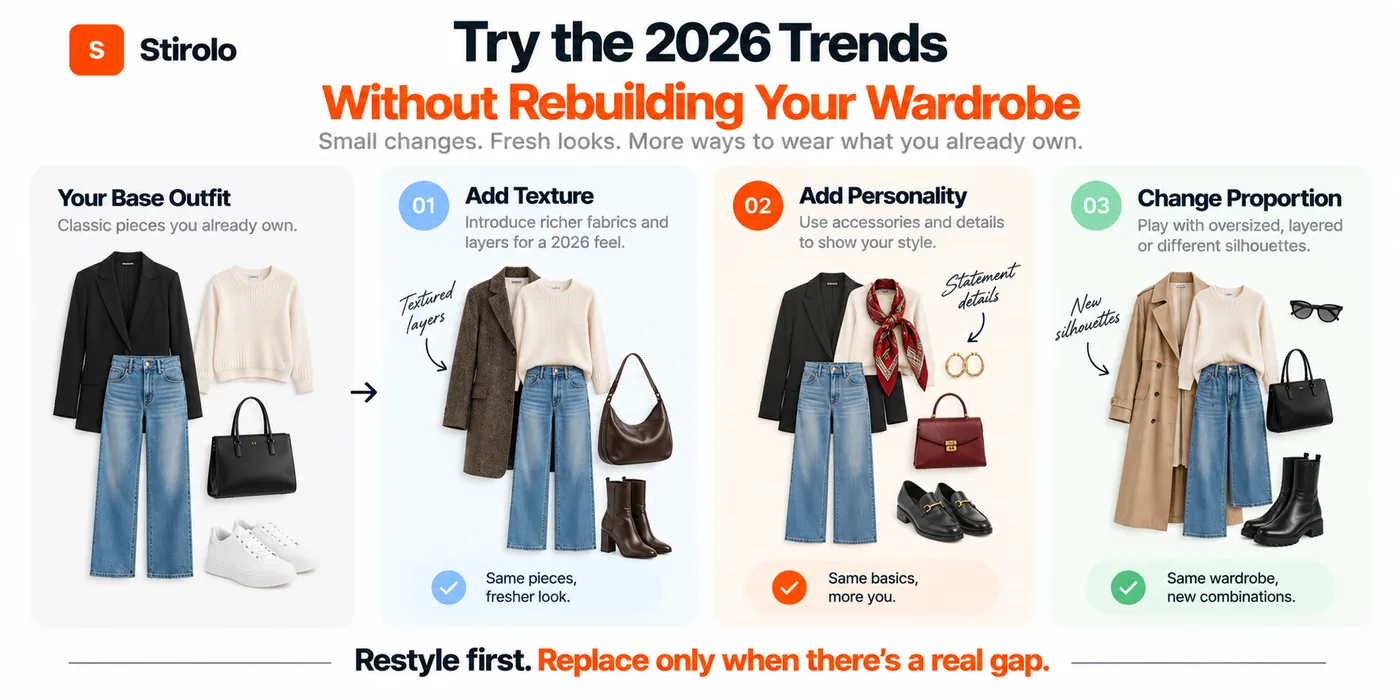
**Start with your existing wardrobe and treat trends as filters, not shopping instructions.** A trend is useful when it helps you notice a combination, color or proportion that fits your life. A trend becomes expensive when it convinces you to replace functioning clothes for temporary relevance.
Choose 1 Trend That Solves a Real Styling Problem
To choose 1 useful trend, identify a gap first. If your basics feel flat, add texture or an accessory. If your outfits feel repetitive, experiment with proportion. If you struggle with combinations, use a wardrobe tool before buying another item.
Restyle Before You Replace
To restyle before replacing, build 3 new outfits around an underused piece. Change the shoes, outer layer and accessory before deciding the garment feels dated. A styling change costs less than a wardrobe reset and reveals whether the item still works.
Separate Personal Style From Trend Exposure
To separate personal style from trend exposure, note which looks still appeal after several weeks. Save repeated preferences rather than every interesting image. Stirolo’s personal style guides can help translate broad fashion ideas into practical principles such as fit, color, capsules and seasonal transitions.
Which 2026 Trends Are Likely to Last Beyond One Season?
**The most durable shifts are personalization, wardrobe intelligence, expressive details and technology that reduces decision friction.** Specific colors and silhouettes will rotate faster. The underlying desire for clothes that feel personal and tools that understand context has a longer runway.
AI shopping will also keep evolving because the underlying problem is persistent: people face too many options. Smart wearables have similar potential when the device becomes comfortable and socially normal. Resale and cost-conscious buying can remain relevant because they respond to economic pressure and overconsumption, not a single aesthetic cycle.
The lasting fashion lesson is simpler. Personal style can absorb trends without surrendering to them. A wardrobe becomes more resilient when new ideas have to work with existing clothes, real occasions and genuine preferences.
How Will Digital Wardrobes Change the Way People Follow Trends?
Digital wardrobes can make trend adoption more selective because they show whether a new idea works with clothes you already own. Instead of starting with a shopping page, you can start with your actual inventory and test combinations against real gaps.
That shift matters in a year defined by both expressive fashion and more careful spending. A statement accessory may create 8 useful combinations with existing clothes, while a fashionable jacket may duplicate 3 pieces you already own. A wardrobe record makes that difference easier to see before money changes hands.
AI can also help separate curiosity from commitment. You might like a runway silhouette without wanting to rebuild your closet around it. A styling system can test the idea through similar proportions, colors or layering using your own garments first. If the experiment works repeatedly, a later purchase has a clearer purpose.
The same logic applies to seasonal change. A digital closet can surface forgotten pieces, track what receives real wear and reveal which trends actually become part of your routine. That creates a feedback loop between inspiration and behavior instead of treating every saved image as a shopping instruction.
For 2026, this may be one of the most practical uses of fashion technology: not predicting a single universal look, but helping each person decide which cultural signals deserve space in a real wardrobe.
Frequently Asked Questions About 2026 Culture, Tech and Fashion
Is quiet luxury over in 2026?
No. Quiet luxury remains relevant, but expressive color, texture and individual styling now sit beside it. Minimal basics still work as foundations for more distinctive details.
What technology trend will affect fashion most in 2026?
AI-assisted discovery is one of the strongest shifts. Consumers increasingly use AI for product advice, comparison and personalized recommendations, while agentic shopping continues developing.
Are smart glasses actually becoming fashionable?
Yes, smart eyewear is becoming more fashion-conscious. Adoption still depends on comfort, design, usefulness and whether people want to wear the frames as everyday accessories.
Will maximalism replace minimalism?
No. The market is becoming more plural. Expressive dressing is growing, but minimal wardrobes remain useful. The stronger shift is toward personal choice rather than one mandatory aesthetic.
Should I buy 2026 trends now?
Only when a trend fits your wardrobe and routine. Try restyling existing clothes first, then buy when a genuine gap remains and the new piece works across several outfits.
Personal Style Is Becoming More Important Than a Single Trend
The most interesting answer to what will be popular in 2026 culture, tech and fashion is not one color, gadget or aesthetic. The bigger story is a move toward individual expression supported by technology that understands context.
Fashion is becoming more playful after years of restraint. AI is becoming more useful for discovery and decision-making. Wearables are becoming more design-conscious. Consumers are also asking for value, durability and experiences that feel less algorithmic.
That combination favors a wardrobe built around your actual life. Use trends to experiment, not to erase your existing style. Use technology to narrow choices, not to make taste automatic. The result is a closet that can evolve with culture without needing a complete reset every season.